There is a Joan Didion quote I think about often. It goes, “Life changes in the instant. Life changes in the ordinary instant. You sit down to dinner, and life as you know it ends.”
“Would you want to get a cat?” was the question asked in this particular ordinary instant.
“Fine, but it’ll be your cat,” I replied to my husband Tino, the cat-lover. Completely oblivious to the life-changing implications of this moment, I added, “I’ll just help you feed it and stuff.”
I thought I hated cats. I avoided them, ignored them, even hid from them.
This was five years ago. I write this now as two of my four adopted cats wrestle for control of the table. A pause, because one decided to take a stroll in front of my screen in a bid for my attention.
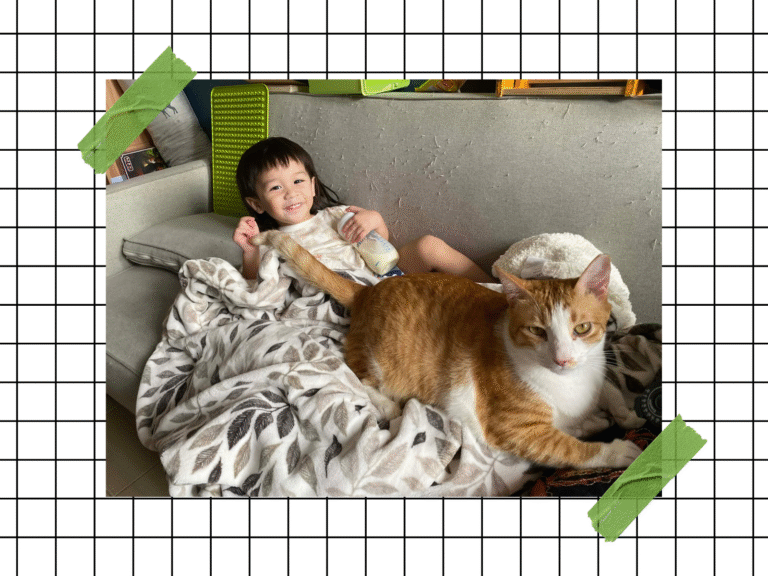
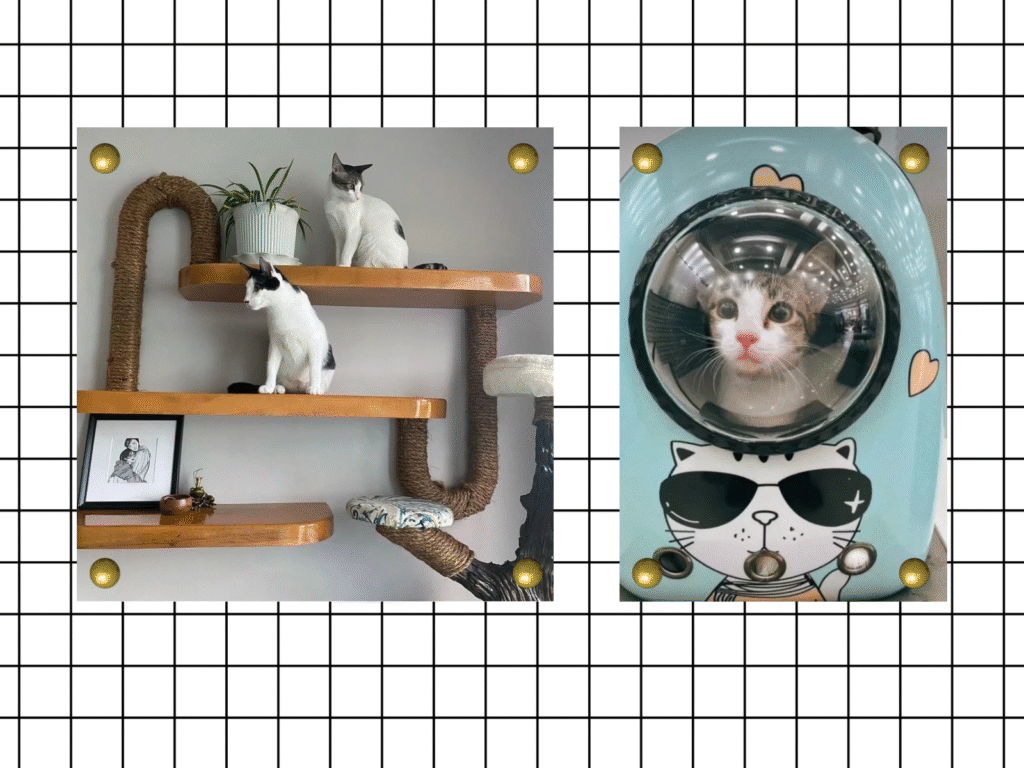
The room I am in was supposed to be a guest room, but so far, the only guests have been foster kittens. It belongs to them, and the rest of our apartment belongs to our pet cats. The sofa has been lovingly obliterated to threads, and the shredded remains of cardboard toys take the place of a welcome mat; a testament to how anxious our cats are to say hello when we return home. My husband and I share one bed, and they have five adorable little beds, one in the shape of an avocado.
I must tell you: The line between not loving cats and loving cats is thin. All it takes is one cat. And that one cat takes you so far over the thin line that you can’t go back.
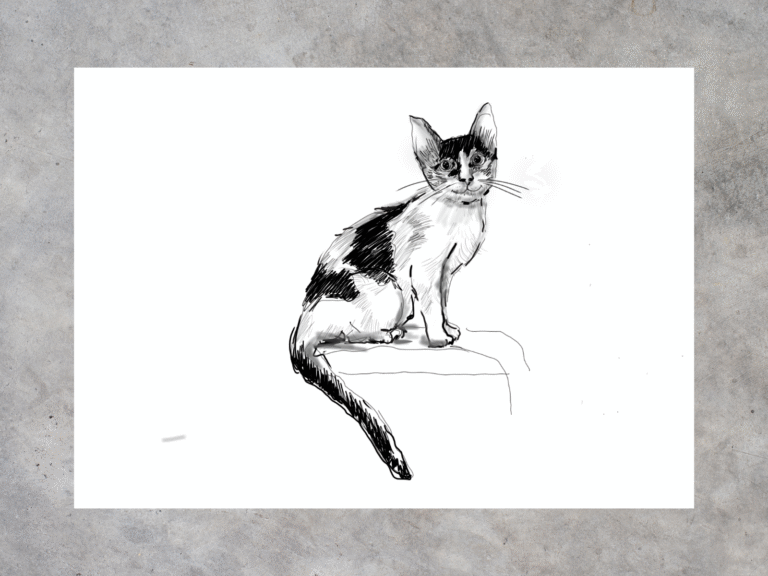
We adopted our first cat—well, my first cat—from our friends. It was a coincidence. The day after Tino and I agreed to get a cat, I told my friend about it, and he said, “We rescued a kitten that needs a home!” They found her and her brother alone when they were just newborns. He sent me pictures of a bi-color tabby, a puspin. She was lying down on top of a refrigerator. She looked, for lack of any other word, ordinary. Like a cat you would pass on the street. The most striking thing about her was her eyes. She was looking straight into the camera with unusually big, soulful eyes.
“Sure, we’ll adopt her,” I said.
We picked her up a few weeks later. During those weeks, I had enough time to panic—what was I getting myself into? I grew up in a house that purchased fluffy white dogs almost exclusively. My family’s pets looked like they belonged on television. My dad had a big fear of cats, and so I grew up indifferent, if not afraid, of all the cats I had ever encountered.
After years of reflection, that pre-adoption panic is one that I can now put to words. My husband was prepared to love this cat, but was I? Am I even capable, I wondered, of loving this kind of animal? Am I capable of loving the stray cat that I would have avoided on the street?
In an instant, that formerly stray animal was living in my house. And I soon found out that the answer to my question was yes, I was.
Ishi, as I later named her, is my soul cat. She is cautious, smart, and picky as hell. We let her out of the carrier, and she hid, facing the corner for hours into the night, and I lay down on the floor next to her. How quickly the magic happens. My mission became to let her know she was safe.
The next day, she found a sack of rice to hide behind. I had done enough reading to know that she would take a few days to warm up. But Tino went to work, and it was just Ishi and me, home together every day. I would sit on the kitchen floor, waiting for her to emerge behind the sack of rice. When she finally did, she slowly put her paws on my thighs and made a strange back-and-forth motion. I took a video and sent it to another cat-loving friend. “What is this strange behavior?” I asked. “She’s making bread!” She said. “It means she loves you.”
What followed was an outpouring of love. I became Ishi’s safe place. She left her hiding spot whenever it was just the two of us. She took her first nap out in the open, cuddled in my arms. When she finally used the litterbox after 48 hours, I was watching from afar, taking a video, and proudly sending it to Tino, “She pooped!!!” She woke me up promptly at 6 o’clock every morning by licking my eyelids—smart girl—and stepping on my chest. To this day, the only place she sleeps is the little nook between my ankles.
“If we break up, you will never see this cat again,” I told Tino. We never broke up, but we did start adopting more cats.
This is the thing about the thin line between not loving and loving cats: It isn’t real. We draw the line ourselves in the fear—sometimes inherited from our parents or the people around us—that perhaps we should not and cannot love something.
It is, in fact, harder to love a stray cat. Suddenly, they are all around: homeless, hungry, alone, hiding under cars and scavenging in the trash for food. In the Philippines, there are thousands and thousands. It was far easier when I did not see them.
I think this is the reason that people like me, when they are finally allowed to love an animal, leap so far into it that they have created the stereotype of crazy cat people, the crazy animal welfare people who care about picking up animals, who won’t shut up about “adopt, don’t shop” or spay-and-neuter.
We used to be you. I used to be you. And now I am the one who asks, “Would you want to get a cat?”
I am a cat person now. My husband knows to prepare the guest room whenever a new batch of kittens are dumped outside our building. We foster them, take care of them, and give them a chance to be loved. I take their pictures and send them to friends and family. I wait until someone else is ready to say yes.