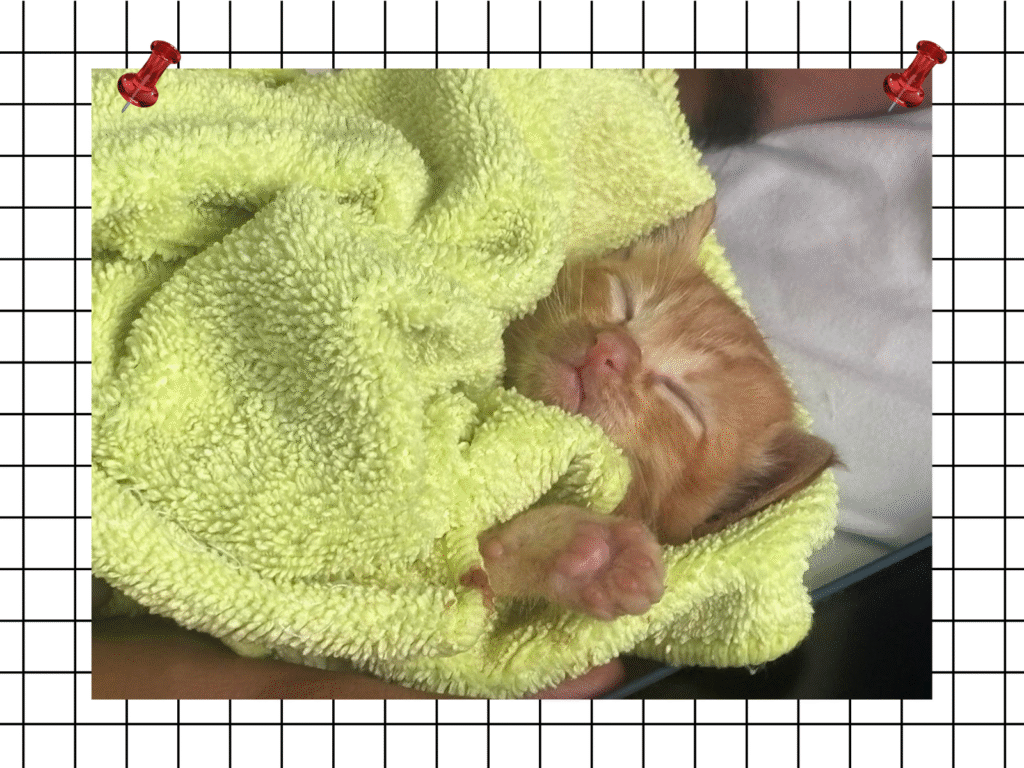
“It is a hallmark of failing societies, I’ve learned, this requirement that one always be in possession of a valid reason to exist.” — Omar El Akkad, One Day, Everyone Will Have Always Been Against This.
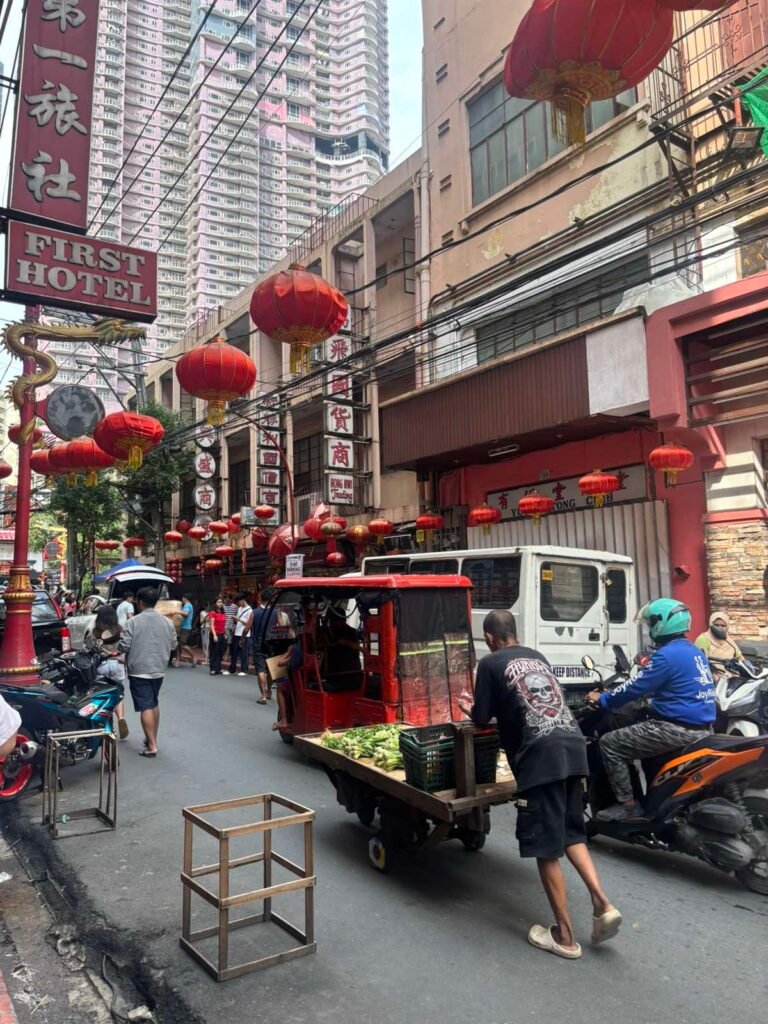
Upon finding a stray kitten, there is a moment needed to calculate, “Am I going to take you home?”
I am used to the arithmetic now: Is my foster room available, do I have any big trips coming up, is it old enough to eat, or will I need to learn to nurse it? Are my pets currently going through any illnesses? Is money enough right now?
It’s an algebraic equation I have down, where x is simply: Am I capable? Can I do this?
I ran the math for five minutes, staring at him. He could not have been more than four weeks old, a pure ginger baby with rounded ears and unfocused blue eyes. Sitting on soil, in the middle of a giant clay pot—likely placed there, with no mama cat or siblings. He called me over with his tiny meows. I stood in the middle of Binondo, on a street where homelessness for animals and humans alike was part of daily life.
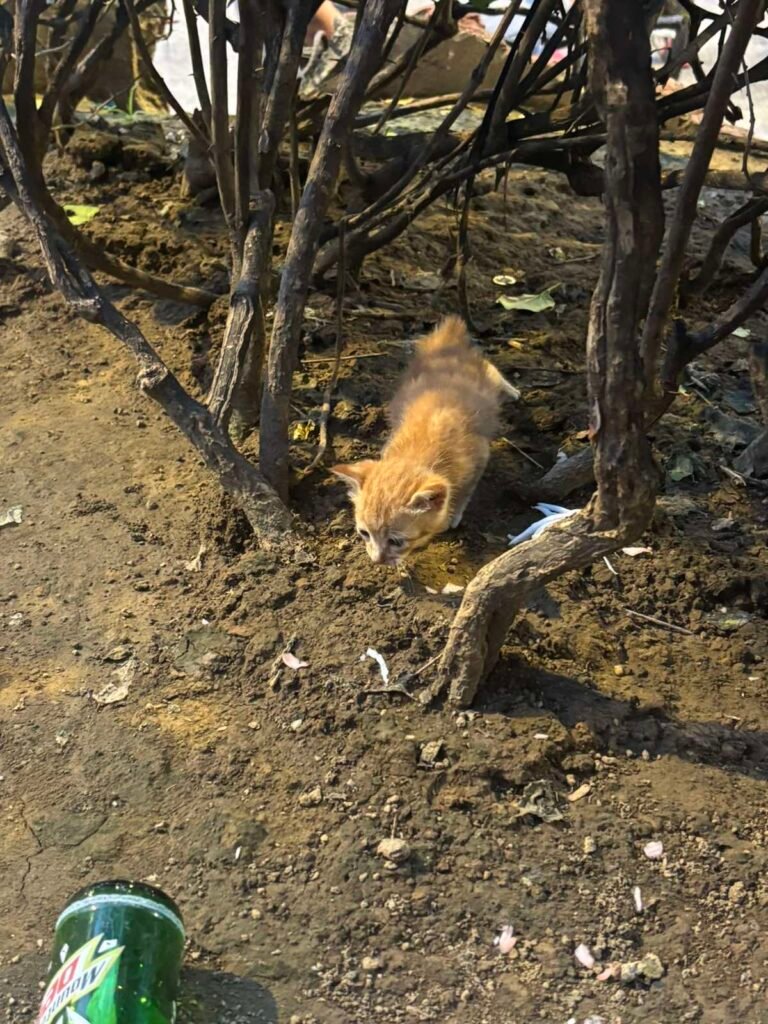
“We really have to go,” my husband Tino says. We were on our way home from a food crawl in Chinatown, walking to the train, and our friends were waiting. “Is he small enough to fit in my pocket?” became part of the equation.
An old woman—who likely was living on those streets—tells us to take him home. “Pinaglalaruan lang iyan ng mga bata,” she says. “Kawawa lang siya dito.”
“Let’s do it,” I say, deciding that we can, in fact, do this. Tino, used to this dance by now, just says okay, no further questions.
The old woman gives the kitten a cuddle and a goodbye: “Uuwi ka na, baby!” She tells him to eat lots of food, to live a good and long life.
For her, it was clear: You can do more for him than I can. She is gleeful as she starts walking away. For me, the clarity is unsettling. This was all I could do?
In the next days, the flooding in Metro Manila would resume—torrential rains that wash away homes in minutes. The past month has seen a month’s worth of rain in a matter of days.
Whenever it rains, my eyes go to my pet cats. All four of them, sleeping, cozy and warm in their beds. I think about the giant pot we found the kitten in, and how easily it would have filled with water. I think about who else might live on that street in Binondo. I think about the photos of the genocide survivors in Gaza, carrying their pets over their shoulders.
I name the kitten Lucky.
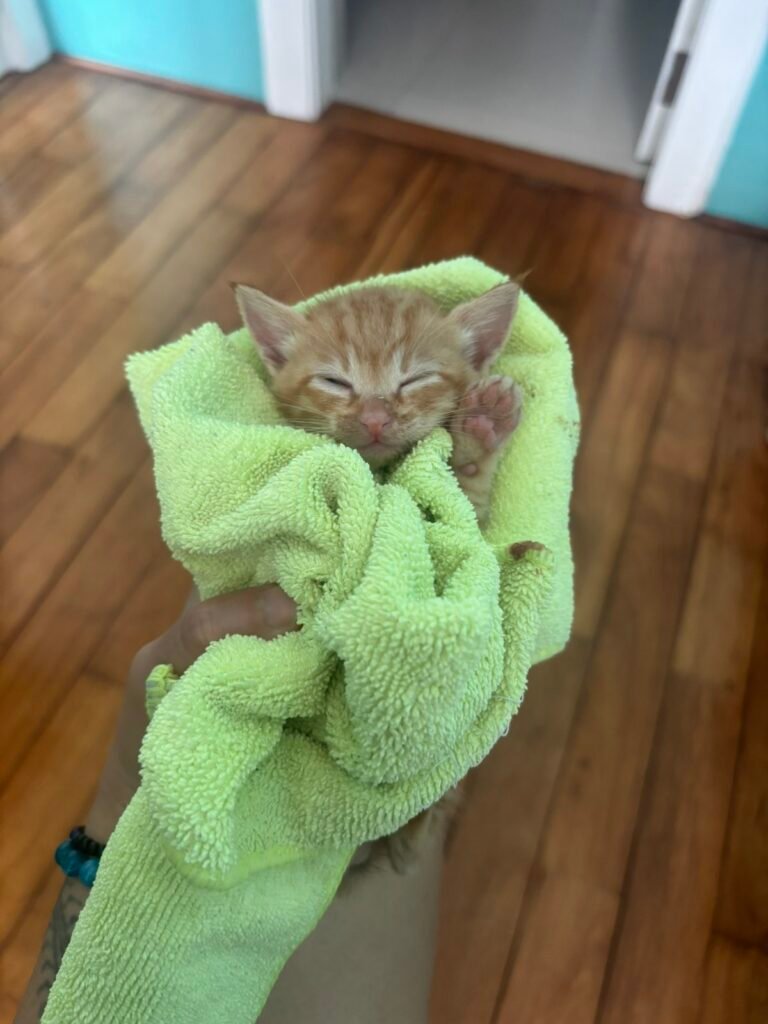
He often holds one paw up, like the maneki-neko (beckoning cat, or lucky cat) figurines all over Chinatown. The folklore behind the maneki-neko dates back to ancient Japan, when a cat beckoned a samurai into a temple, asking him to rest, saving him from a sudden thunderstorm. A symbol of good fortune and hospitality.
Lucky is diagnosed with panleukopenia, a sickness that is almost always fatal for young, unvaccinated kittens. My first panleukopenia case.
“Maybe we should confine him,” Tino says, thinking about our four pet cats. Maybe, I reply. But we keep him at home. My best friend Anna stays over, and Lucky has three adult caretakers watching him around the clock—water with supplements force-fed to him every two hours for the first 48 hours. The small guest bathroom becomes a quarantine zone, where we wear full booties, gloves, and a smock just to enter. Sleep deprivation ensues for all of us.
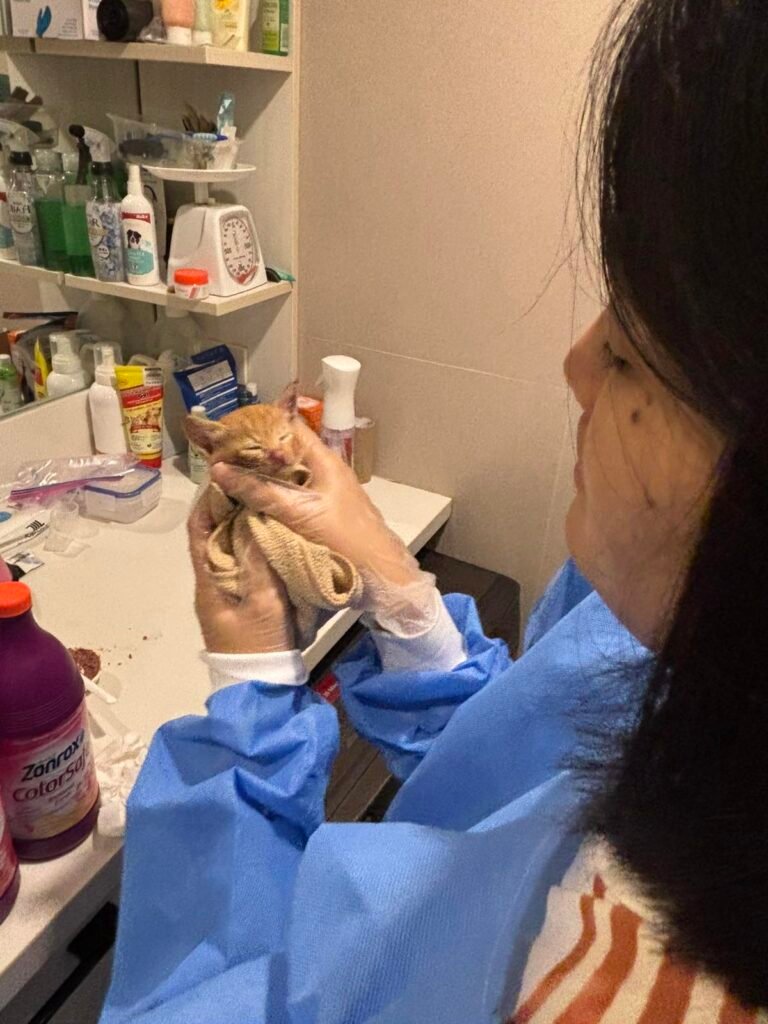
It is a crazy amount of work for one tiny kitten. All math is shot to hell.
They say it takes seven days for panleukopenia to clear. On Day 3, Anna messages, “Did you see about the flash flood in Nepal? Grabe.” I read the news; a flash flood like never before tore through the Gyirong Port. Hundreds upon hundreds of people are washed away, thousands missing. So scary, I say. We don’t say much more, except to update each other on the state of Lucky’s poop.
Lucky has no idea. Every feeding, he cries, eats, then falls asleep in our hands, like clockwork. Wrapped in a small towel, he starts suckling. A moment of peace, before we have to do it all over again. He could not possibly know that he is giving us a valid reason to exist.
Fostering is a salve in a broken world—the equivalent of using a reusable straw while plastic waste is dumped directly into the ocean, or planting a tree while forests are cut down en masse.
I am often painfully aware that it does nothing to stop the harm to stray animals, of which there are hundreds of thousands. In the Philippines, there is not even a statistic, so overwhelming are the numbers.
It is a world of existential dread for those of us with our eyes open.
But it is a salve nonetheless. A small act of resisting a world that hurts.
I’ve interviewed animal rescuers who have dedicated their whole lives to rescue work. I have learned that these are people who see the ache more clearly—so their responses are simple: perhaps this, I can do.
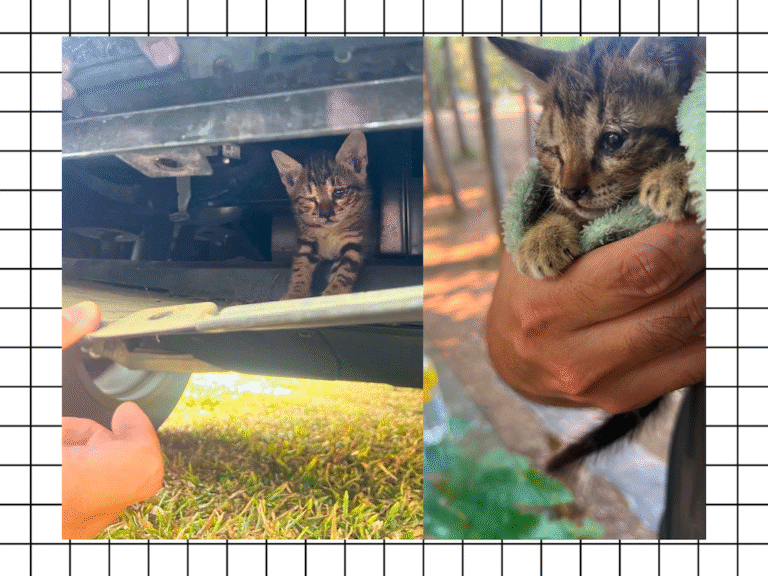
Since naming Lucky, I have learned of at least five more cats named Lucky. Some of whom have survived fatal illnesses—like our Lucky did—and some who were simply in the right place at the right time, until someone who felt capable came along.
Today is Day 7 of Lucky’s panleukopenia.
We are taking him to the vet to find out whether he has beaten the virus. We place him in a box, after cleaning up another one of his endless poops. The hope is strong—I imagine letting him out of quarantine and giving him his own bed, where he can sleep with one paw up. Outside, after another night of rain, the sun peeks through.