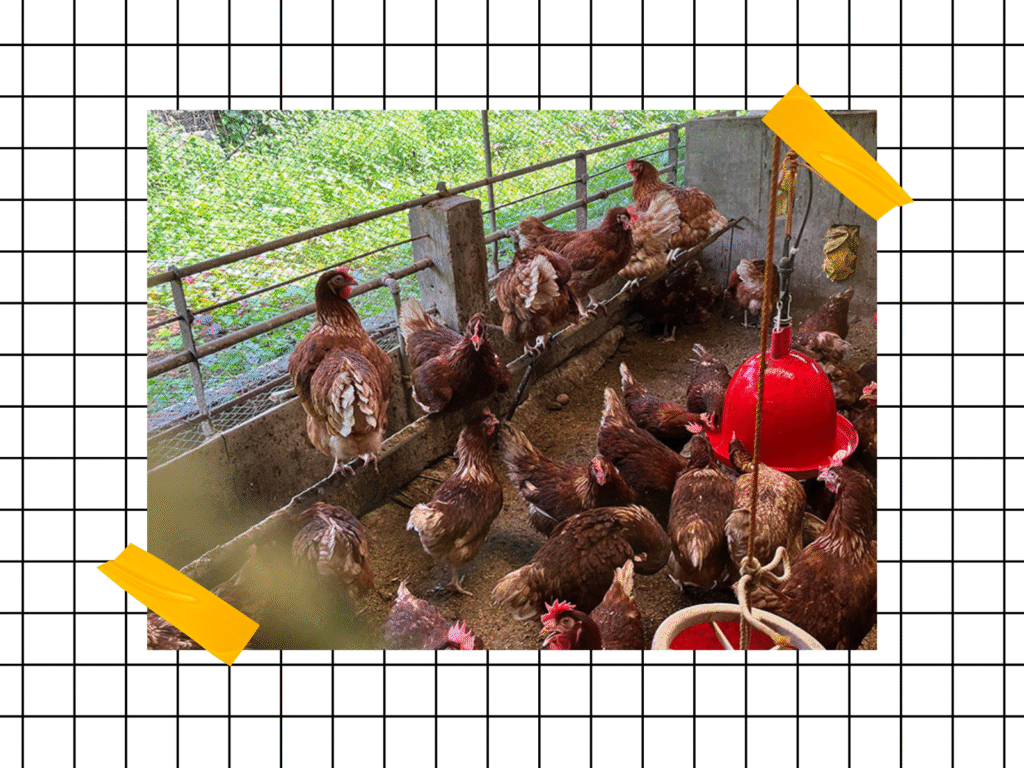
In a welcome development for animal advocates and compassionate consumers alike, another poultry house at Robina Farms has received cage-free certification from the Animal Kingdom Foundation (AKF)—a milestone that signals meaningful progress for hen welfare in the Philippine egg industry.
Animal welfare certifications are granted per poultry house, rather than automatically across an entire farm or brand, making each newly certified facility a concrete, verifiable step forward rather than a blanket claim.
The certification indicates that the newly certified poultry house meets cage-free standards designed to allow egg-laying hens greater freedom of movement and the ability to express natural behaviors. For Pawsture, this is evidence that incremental, verifiable changes in how animals are housed and treated are possible within the Philippine egg industry.
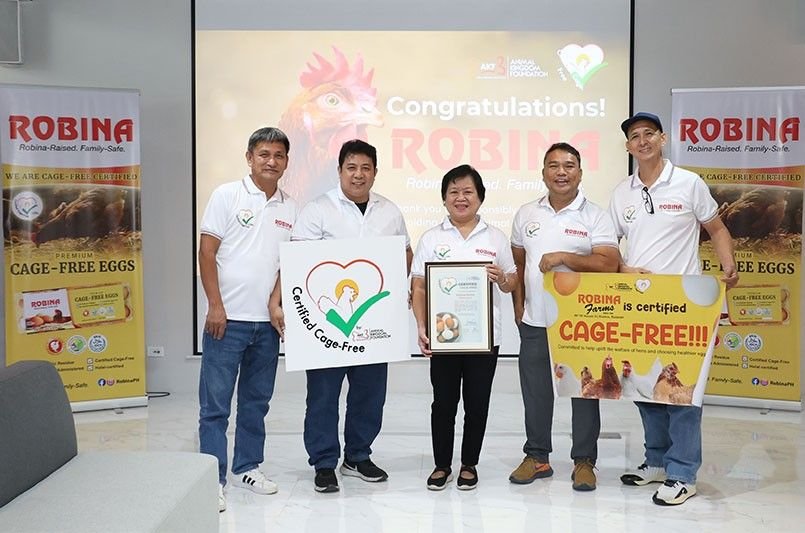
Robina Farms underscored that the certification was both a recognition and a responsibility. “We are deeply honored to receive this NGO Cage-Free Certification. This certification reflects the hard work of our team and our ongoing commitment to raising animals with care, respect, and accountability,” said Lina Macailing, farm operations head manager.
For Robina Agri Partners, the milestone also speaks to trust and alignment with changing consumer values. Marketing director Mary Jane C. Bernardo noted that the certification further strengthens Robina Farms’ position as a producer attuned to evolving expectations and global animal welfare standards. “We are continuously fulfilling our purpose of delighting our consumers with good food choices,” she shared.
What “Cage-Free” Really Means for Hens
In conventional egg production, hens are typically kept in small wire cages where they can’t stretch their wings, forage, perch, dust-bathe, or express other instinctive behaviours essential to their wellbeing. Cage-free systems change that dynamic.
Under the Philippine National Standard for Cage-Free Egg Production, “cage-free” means hens are not confined to cages and are able to move around within their housing. At a minimum, they must have enough space to walk and stretch, access to nesting boxes to lay eggs, perches to roost, and litter on the floor so they can scratch and dust-bathe—natural behaviors essential to their wellbeing. The housing must be properly lit and ventilated, with temperature and air quality monitored to prevent stress or harm. Farms are also required to keep records, follow basic hygiene and biosecurity rules, and label eggs accurately—so only eggs from certified houses can be sold as cage-free. These standards represent the baseline requirements for cage-free production. These standards form, not an idealized standard, but a regulated floor below which producers should not fall.
With improved space, comfort, and environmental enrichment, cage-free environments contribute to better overall welfare, allowing hens to live in conditions that more closely resemble their natural needs.
This isn’t just a nicer life for hens. Scientific and animal welfare communities agree that such environments reduce stress, injury, and disease, leading to healthier birds overall. It’s a basic principle: animals that can live more naturally and comfortably are less likely to suffer from chronic stress and its associated health impacts.
A Ripple Effect Across the Industry
Robina Farms’ achievement builds on a growing movement within the Philippines and globally. With the Philippine National Standards for Cage-Free Egg Production as framework, animal welfare is slowly becoming a recognized benchmark in poultry farming, rather than an optional add-on. As more farms embrace cage-free systems, the industry moves closer to a future where compassion isn’t an afterthought, but a standard practice.
How to Choose Cage-Free Eggs at the Grocery
It’s important to note: not all eggs from cage-free certified producers are cage-free—and that includes Robina Farms. While the company now offers certified cage-free egg variants, it continues to sell conventional eggs as well. For consumers who want to support higher animal welfare standards, the key is to check the packaging carefully. Look for eggs that are explicitly labeled “cage-free” and, where available, carry third-party certification or animal welfare seals. If the carton does not clearly state “cage-free,” the eggs likely come from conventional caged systems. Choosing labeled cage-free eggs sends a clear signal to producers that humane practices matter—and helps drive broader change across the industry.
As cage-free production continues to expand, consumer awareness and purchasing decisions play a crucial role. Every time shoppers choose certified cage-free eggs, they help reinforce demand for more humane systems—and encourage the industry to keep moving in the right direction.
At Pawsture, we see cage-free certification as a step toward a kinder, more ethical food system. We’ll continue tracking how certified cage-free practices evolve, how consumer demand grows, and how policy changes support animal welfare on farms large and small.
Because ultimately, every hen that gets to live with dignity and natural freedom reflects progress not just for animals—but for all of us who share this world with them.