This isn’t a story I’m proud of, but it’s one I need to tell. For myself. For the others who might be on a similar path.
I once stood on the wrong side of animal cruelty.
When I was fifteen, I supported dog fighting. I attended matches and even placed bets. Even after many years have passed, saying that out loud now still makes me uncomfortable, because it’s something I am deeply ashamed of.
There is no excuse, of course. But back then, I was young and gullible, surrounded by friends who were a decade older than me. I thought being around them meant I was learning about life through their experiences. Most of them owned American Pitbull Terriers. They told me there were two types: the “fighting line” and the “show type.” The fighting line was glorified as lean, intimidating, and bred for violence. That image appealed to me as I wanted something scary and macho.
So I bought one who I named Garrett.
Garrett and I joined street rolls, or in human terms, sparring sessions. Soon after, the underground dog fights became more organized in places like Cogeo and Antipolo in Rizal, and Pulilan in Bulacan. Dog fights were held inside private farms hidden from public view.
Groups formed their own kennels, breeding and training dogs to fight—much like roosters bred for cockfighting.
The ruweda was carpeted and enclosed with thick fiberglass walls so spectators could sit safely and watch.
Some fights lasted up to an hour. Some ended in death.
Before matches, handlers bathed each other’s dogs to make sure no poison had been applied to their coats. I saw dogs who lost fights dumped on the side of the road, barely alive. I heard stories of others being shot afterward.
And at the time, I felt nothing. No empathy. No sadness. Just emptiness. Maybe I was naive. Maybe I simply didn’t care for animals then. Either way, that indifference is something I now recognize as cruelty.
Years later, after moving to Manila, I went a long time without pets. That changed in December 2017, when my sister gifted me an American Bully because the owner could no longer care for the puppies. I named him Nitro—my first dog after many years. I began learning what it actually meant to care for a dog: not as an accessory or symbol, but as a life.
Soon after, we accepted another puppy from a friend who could no longer keep him. I named him Nacho. He became my soul dog. Later, we took in the same friend’s seven-year-old Pomeranian, Noodle. Noodle quickly became my sister’s—and my mother’s—favorite.
We decided three dogs were enough.
But of course, life had other plans.
During the pandemic, I got COVID. My oxygen levels dropped dangerously low and I was isolated in my room for twenty-one days. Nacho would cry outside my door, trying to get in. Eventually the news said that dogs cannot be sick of COVID so I allowed Nacho to stay inside my room.
During my isolation we just kept on talking, praying, and sleeping. Nacho was my constant companion.
Then I lost him. Nacho died from GDV or Gastric Dilatation–Volvulus. At the time, I didn’t even know what it was. I still think about how things might have been different if I had known.
His death broke me.
I spiraled into anxiety and a kind of depression so severe that I needed therapy just to survive it. I didn’t understand why I was grieving so deeply over a dog — especially someone like me, with my past. But the pain was real. Thankfully a friend and my family held me together during my darkest months.
On my birthday that year, that friend suggested we try stray feeding. She even bought the supplies such as dog food, a pail, and paper plates. I reached out to Pawster Sherry, an animal advocate and stray feeder, for guidance, because I honestly didn’t know where to start.
The stray feeding became a daily routine.
During my feeding rounds, I started noticing community dogs in urgent need of medical care. Some were owned—but clearly abused or neglected. My anxiety returned, but this time it pushed me to act. I reached out to several rescue organizations. Only one responded.
Ma’am Rina Ortiz of Biyaya Animal Care stepped in to rescue those dogs.
After that, somewhere along the way, I realized I had become an advocate.
From a few dogs in Taguig, my pack grew to twenty-one—not counting those I was able to rehome. Some were abandoned. Some were owned but neglected, and I chose to keep them. I’m a terrible foster parent, by the way. I get attached too easily.
But this advocacy saved me.
Helping animals became the only medicine that eased my anxiety. It gave my grief a purpose.
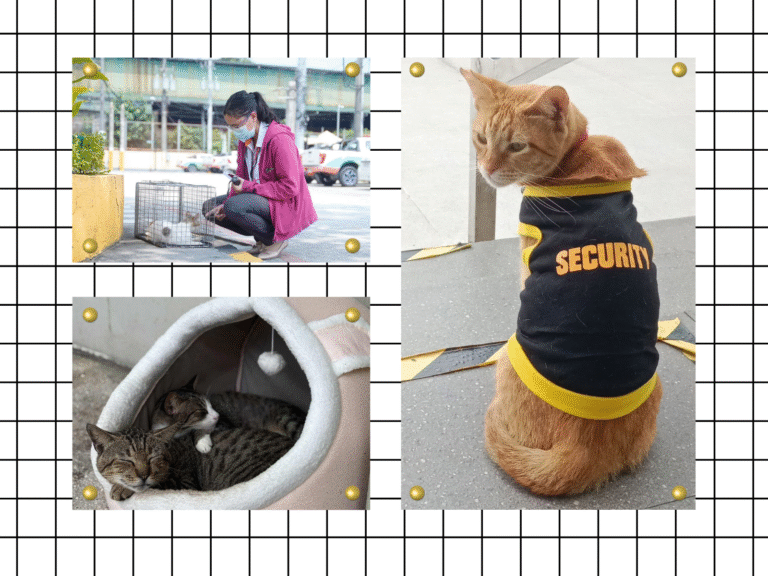
Today, I feed 29 cats and 10 dogs every day. I have helped facilitate the spay and neuter of 13 dogs and 4 cats. I have found homes for 2 dogs and 4 cats, and personally rescued 21 dogs—19 of whom are still under my care. With the help of Biyaya Animal Care, I have also rescued 16 abused and abandoned dogs and brought them to safety.
From being somebody who attended dog fights, I now measure my own success in the number of animals I’ve fed and the lives I’ve saved.
I’m not proud of my past. But I am doing what I can now—within my limits—by helping animals, connecting people who share the same goal, and choosing to stand on the side of compassion. I’m deeply grateful for the people I met through Biyaya Animal Care, who showed me what real care looks like, taught me the importance of TNVR, and expanded my understanding of animal welfare.
I am sharing this story with the hope that it reaches even one person.
Because if someone like me—a person who once participated in something so cruel, someone who once felt nothing—can change, then maybe others can too. And maybe that single change can start a chain reaction of kindness for the animals around us.