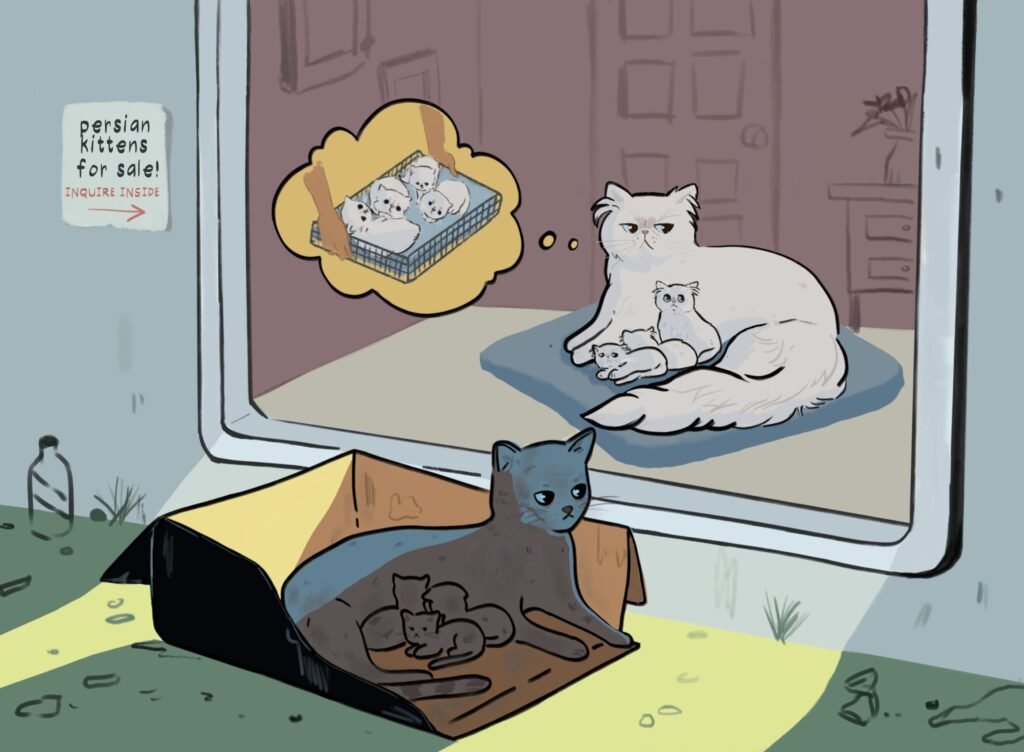
Let’s say you’re thinking about adding a furry companion to your family. Where do you start looking? If your first thought is Facebook Marketplace or a friend’s litter of puppies or kittens, chances are you’re unknowingly supporting a practice called backyard breeding.
In the Philippines, backyard breeding has become all too common. It refers to the irresponsible breeding of pets, typically dogs and cats, by individuals in their homes. Whether accidental or intentional, the result is the same: an endless cycle of overpopulation, neglect, and suffering. Yet, this issue rarely receives the attention it deserves.
Backyard breeding might seem harmless at first. What’s so wrong with letting a family pet have a few litters? But the reality is that this practice directly contributes to the country’s stray animal crisis. Thousands of animals are born each year into homes unprepared to care for them. Many are sold to strangers online, passed around, or ultimately abandoned.
These animals are often denied basic care. They may not receive vaccinations, deworming, or proper nutrition. Many suffer from preventable health problems due to the lack of veterinary attention. As they grow, some are neglected or left to roam the streets, joining the countless others already struggling to survive.
One of the most troubling aspects of backyard breeding is how normalized it has become in Filipino households. For many families, it’s seen as a casual or even affectionate activity, something done out of love or to earn a little extra income. But normalization doesn’t make it right.
False beliefs, such as the idea that a female pet should give birth at least once for health reasons, continue to spread. This myth has no scientific basis. On the contrary, unnecessary breeding increases health risks for the animals and leads to even more unwanted litters.
A key factor behind the spread of backyard breeding is a lack of education. Many pet owners simply aren’t aware of the consequences of allowing their pets to reproduce. Cultural ideas about nature, religion, or tradition can lead people to believe that breeding is a natural, and even necessary, part of pet ownership.
Another major driver is profit. The demand for “designer” pets and purebred animals continues to grow, especially through unregulated platforms like Facebook. Whether people are selling animals for high prices or just trying to “rehome” a litter cheaply, the result is the same: more animals are brought into a world already overwhelmed by homelessness and neglect.
This is not just a problem created by breeders. It’s a community-wide issue. As long as there is demand for specific breeds or “aesthetic” pets, people will continue to breed animals for financial gain. But we need to ask ourselves an important question: why are native dogs and cats, our beloved aspins and puspins, still seen as less valuable than imported breeds?
These animals are just as intelligent, loyal, and loving as any purebred pet. The only difference is that they’ve been overlooked and left behind.
If the true purpose of getting a pet is companionship, then adoption should be the first and only option. Adopting a rescue not only saves a life, it also helps reduce the demand that fuels unethical breeding practices.
The conditions in which backyard-bred animals are raised are often inhumane. They’re kept in small, dirty cages, with little access to clean water or food. They’re exposed to extreme heat, rain, and illness. Female animals are forced to give birth repeatedly, with no time to recover. Over time, this breaks down their bodies and their spirit.
Because these activities happen inside private homes or informal settings, they often go unnoticed. And while animal welfare laws do exist in the Philippines, enforcement is weak. As a result, backyard breeders operate with impunity, while animals continue to suffer.
So, what can we do?
The first step is education. More people need to understand the long-term harm caused by allowing pets to breed. We must speak openly about the reality of this issue and dispel the myths that keep it going.
We also need greater access to affordable spaying and neutering services. Expanding these programs to both urban and rural communities can significantly reduce the number of unwanted animals born each year.
Most importantly, we must shift the way we think about animals. They are not property. They are not decorations or profit-making tools. They are living, feeling beings who depend on us for compassion, safety, and care. When we breed them for convenience or money, we fail them.
Backyard breeding continues because we’ve allowed it to become normal. But normal doesn’t mean acceptable. If we truly want to reduce the suffering of animals, we must stop creating more of them, especially when so many are already waiting in shelters or dying without ever knowing a home.
Every life matters. Every adoption counts. By choosing to adopt, refusing to support breeding, and educating those around us, we can move toward a future where animals are respected not exploited.
The animals aren’t the problem. Our choices are. And it’s time we made better ones.