
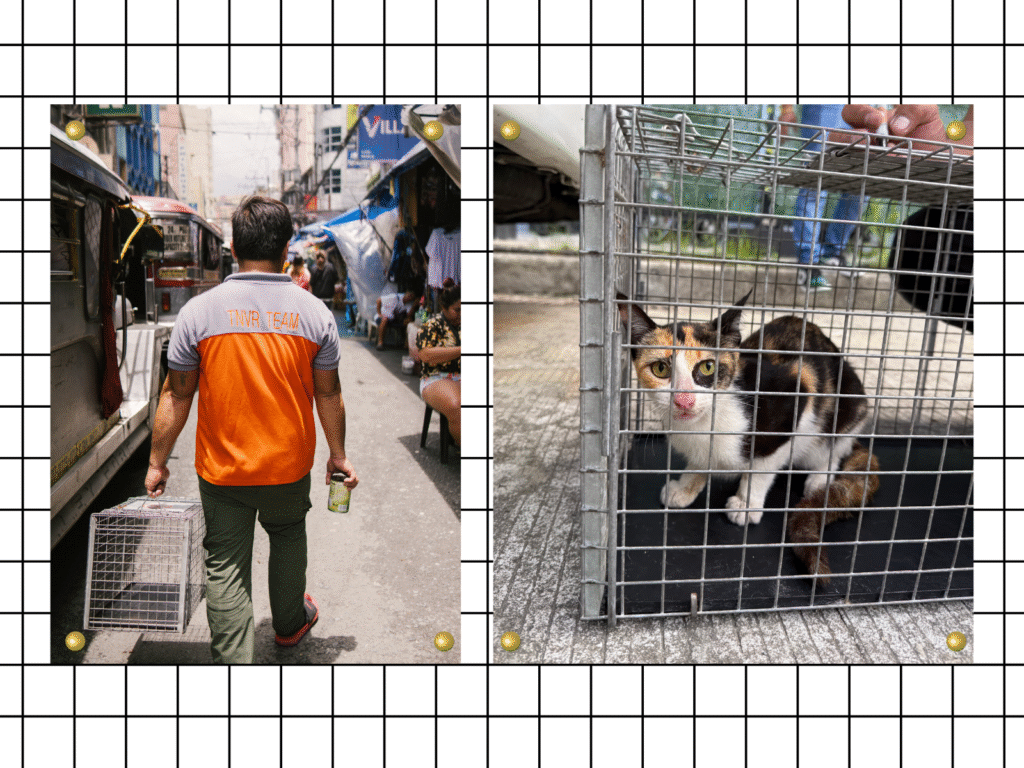
There is a temptation, in any movement, to look for the solution — the one organization, the one model, the one hero that will finally fix the problem. Animal welfare is no different. When the situation feels overwhelming, we instinctively reach for singular answers.
But the real solution, I believe, requires all of us to participate. What will truly move the needle for animal welfare in the Philippines is not the brilliance of one group, but the combined effort of individuals, organizations, service providers, and both local and national government.
This is why I take the view that Biyaya Animal Care’s most important contribution to animal welfare is not the breadth and depth of its work—impressive as these may be—but the fact that it makes it possible for more people to take part. By providing access, Biyaya empowers individuals, encourages participation, and reinforces what I have come to understand as the heart of the movement: collective action.
Biyaya Animal Care set out with a deceptively simple mission when it was founded in 2022: to help build a healthier, safer Philippines for both people and pets. From the beginning, its founder Rina Ortiz understood something that many animal advocates often forget—that animal welfare is inseparable from human welfare.
It is that clarity, I believe, that shaped the way Biyaya Animal Care carries out its work. It shifted the focus from asking people to do more, to making it possible for individuals and groups to do the right thing.
The ethos of Biyaya’s work may be encapsulated in this one sentence: if you want to help animals, you must first help people help them.
Access – specifically, access to affordable spay and neuter services and anti-rabies vaccination – is central to Biyaya’s mission. Therefore Biyaya operationalized access by building it into a system. They created multiple, interconnected ways for people to act depending on where they are, what they have, and what they’re up against.
As Rina puts it: “No single approach works at scale. Clinics, TNVR, and LGU partnerships each solve different gaps—and without integration, animals fall through the cracks. Building them together turns isolated efforts into real, lasting population control.”
The following are the key elements of Biyaya Animal Care’s architecture for action:
A low cost kapon clinic
On Katarungan Street in Mandaluyong, Biyaya operates one of the few low-cost spay and neuter clinics serving Metro Manila. Open six days a week, the clinic offers affordable kapon while maintaining professional veterinary standards.
I know how significant this is. Years ago, bringing cats to private clinics often meant paying at least ₱4,000 per animal—a cost that quickly makes it challenging for a community caregiver to sustain a TNVR program. These days, I bring animals to Biyaya Katarungan and I avail of their low cost kapon while also knowing they are in the hands of veterinary professionals with hard-earned experience in spay and neuter. Biyaya’s vets have expertise built not just in theory, but through hundreds of procedures carried out under real-world conditions.
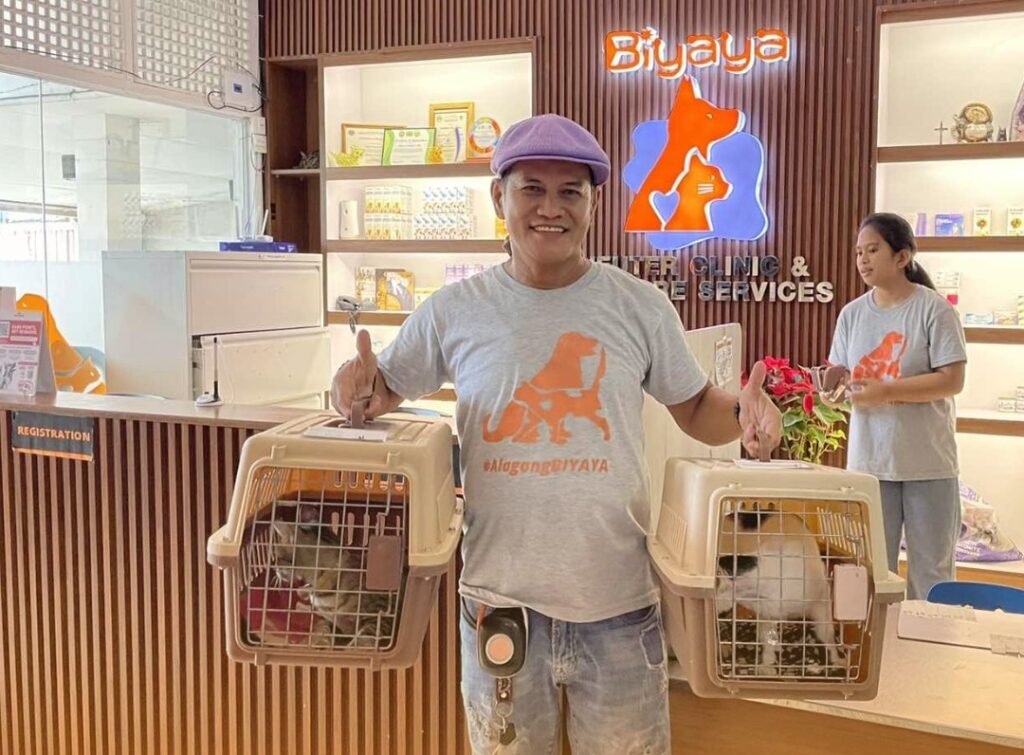
Rina believes that animal suffering in the Philippines is driven by scale, not a lack of compassion. “Kapon is the only humane way to stop the cycle at its root. Making it affordable turns responsibility into something communities can actually practice.”
But affordability alone is not enough. Biyaya understood early on that making spay and neuter more affordable, while essential, is not sufficient in order to make a dent.
TNVR that meets people where they are
Many community caregivers struggle with the logistics required to maintain a TNVR (Trap, Neuter, Vaccinate, Return) program.
Catching feral cats requires skill and experience. Carriers are expensive. Transporting multiple animals across the city means taking time off work or finding volunteers. Post-operative recovery requires space that many people simply do not have.
Biyaya’s community-based TNVR service addresses these challenges directly. Professional trappers handle the capture and provide carriers. Animals are transported to the clinic, spayed or neutered, vaccinated against rabies, and boarded for two to three days to give them time to recover before being returned to their original communities.
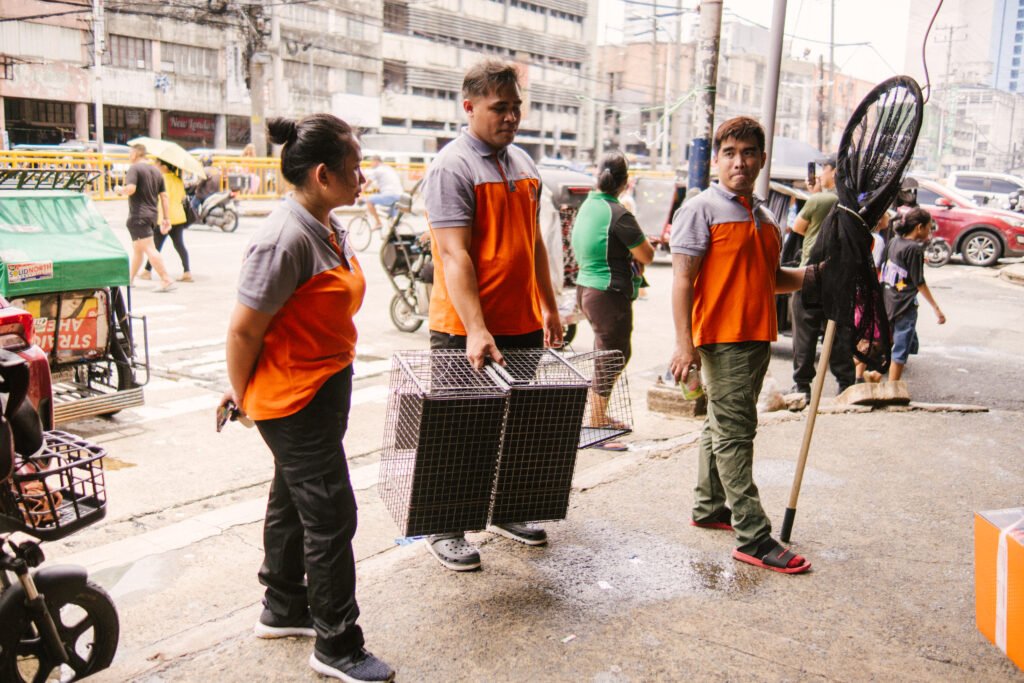
What this model offers is not only convenience but continuity as well. Caregivers who might otherwise manage to neuter only one or two animals at a time can now stabilize entire colonies in one go. The work becomes sustainable.
“Organizations like Biyaya should act as bridges,” Rina explained. “We translate policy into practice, scale veterinary expertise into communities, and support caregivers on the ground.”
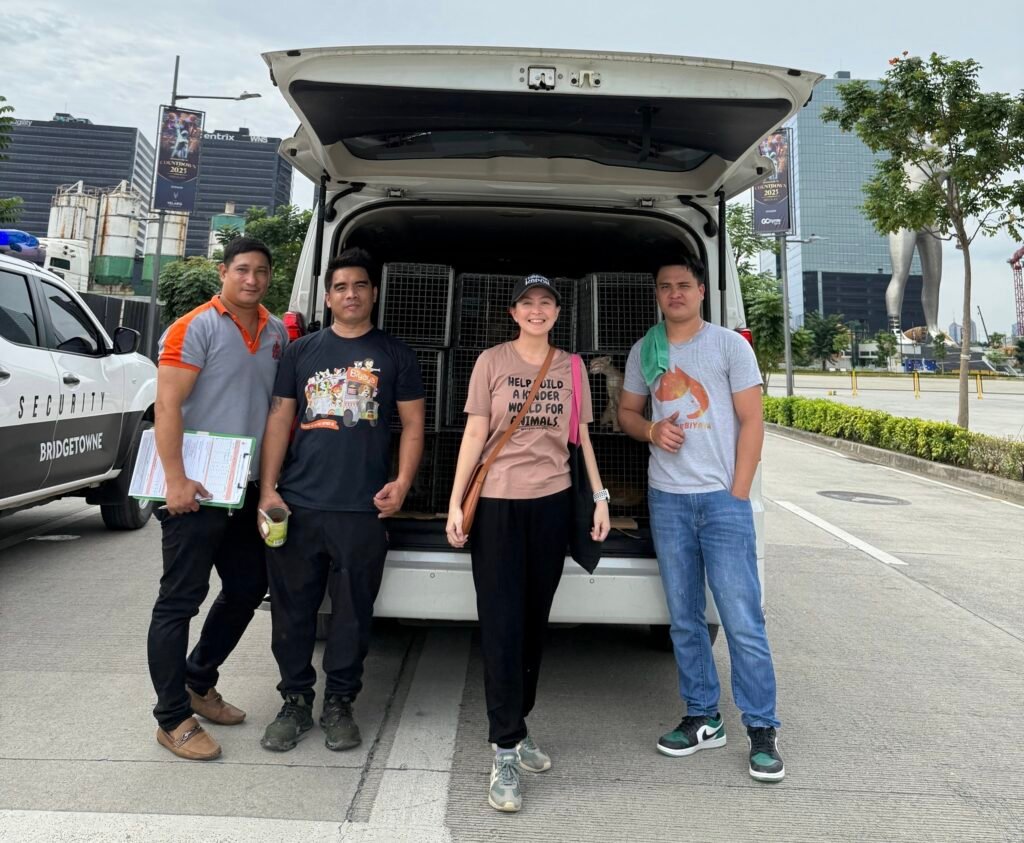
I have personally availed of Biyaya’s TNVR services on several occasions in different communities. What consistently stands out is the team’s skill and patience in safely securing community animals, and how much more manageable the work becomes as a result. The post-operative boarding is also deeply appreciated. I am assured that the cats are given a few days to recover in a safe environment before being returned to their territories.
With Biyaya as a partner, I am able to focus on raising funds and communicating with my neighbors about what TNVR is and why it matters. After years of conducting TNVR runs while having to do everything on my own, gaining access to this kind of support was a genuine game changer for me.
Partnerships that make humane action possible
Community animals live in barangays, campuses, business districts, subdivisions, and condominium complexes. These spaces are governed by homeowners’ associations, property managers, and local governments—many of whom are under pressure to “solve the stray problem,” often quickly and with limited guidance.
Biyaya offers an alternative to impoundment by making humane population control feasible. Through partnerships with property managers and LGUs, it helps integrate spay, neuter, and anti-rabies vaccination into community-level efforts.
For communities and institutions that want to act responsibly but lack expertise, Biyaya provides a workable framework. For LGUs with limited resources, it adds manpower, technical knowledge, and operational support.
Beyond institutional and government partnerships, Biyaya also plays an important role within the animal welfare ecosystem itself by enabling other organizations to carry out their own kapon missions at scale. By providing veterinary services and on-the-ground operational support, Biyaya allows groups such as People for the Ethical Treatment of Animals (PETA) to conduct large-scale sterilization efforts. In this way, Biyaya functions not just as a service provider, but as shared infrastructure for the broader movement.
In addition, Biyaya also invests in capacity-building by training veterinarians, including in techniques such as flank spay, which are particularly useful in community settings.
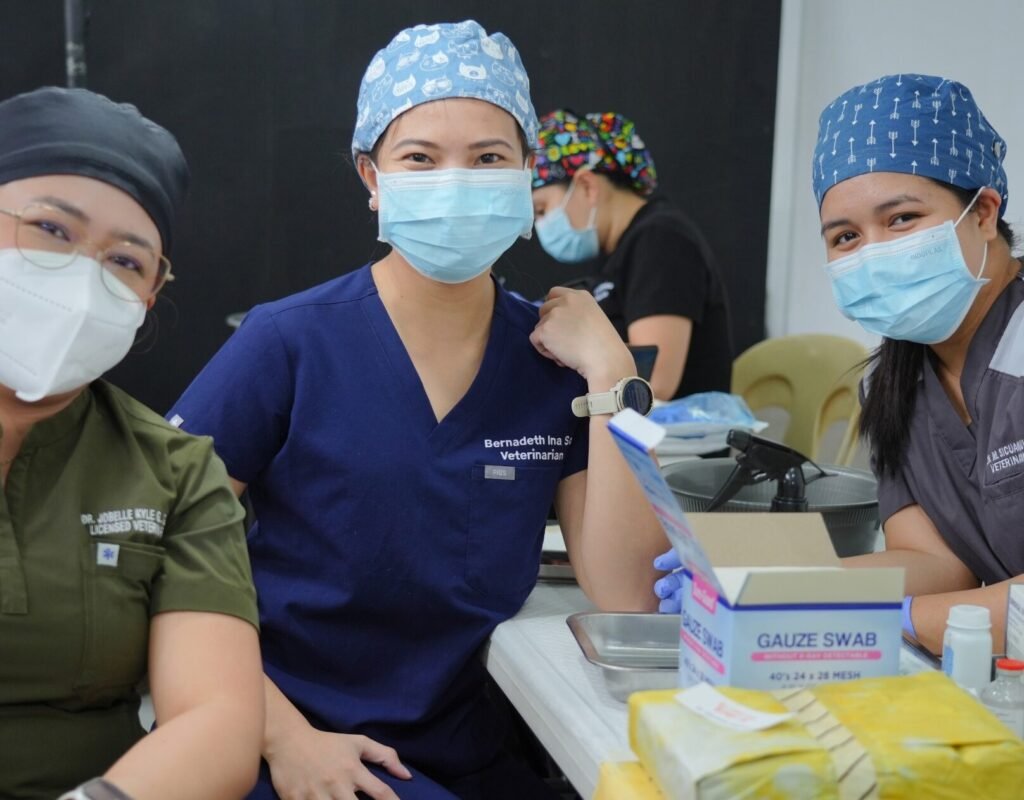
Once again, Biyaya provides access. And Biyaya designed the way they give it by considering the realities communities actually face.
Biyaya’s Impact
According to Rina, “Real change happens when NGOs help align government, veterinarians, and citizens into one coordinated system.”
This philosophy underpins Biyaya’s work with LGUs, property managers, and animal advocates.
In 2025 alone, Biyaya spayed and neutered 18,701 animals—17,183 cats and 1,518 dogs—working in more than a hundred communities nationwide. It conducted 30 outreach kapon events across the Philippines, reaching as far as Siargao. Of these, 20 were carried out in partnership with PETA, expanding access to free TNVR services in both urban and regional settings.
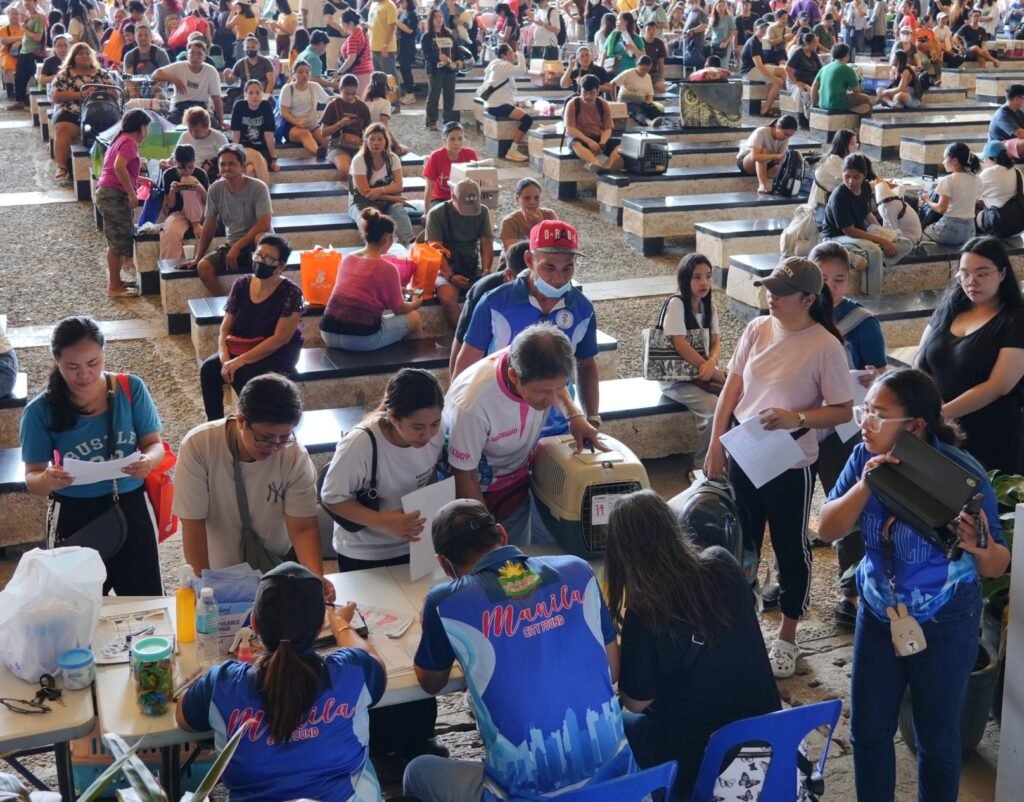
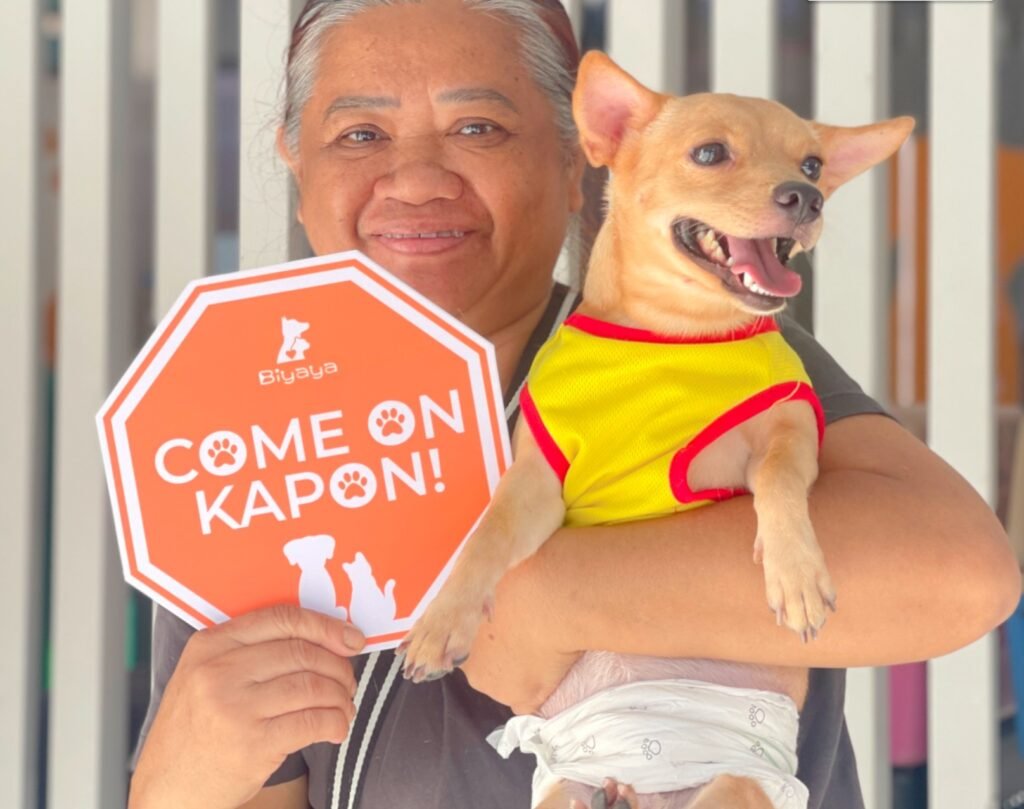
One of the most significant efforts under this umbrella was Come On, Kapon!, Biyaya’s large-scale outreach initiative held at Luneta. The event resulted in the sterilization of over 1,056 animals in a single day, making it one of the largest spay-and-neuter outreach efforts of its kind in the country.
Alongside service delivery, Biyaya also trained over 150 veterinarians in 2025 which expanded the pool of professionals equipped to do spay and neuter.
“My vision is a Philippines where animal welfare is preventive, not reactive,” Rina shared. “Where kapon and rabies vaccination are accessible, normalized, and supported by policy. A country where fewer animals need rescuing—because we finally addressed the root causes.”
The good news is that Biyaya Animal Care is only just beginning. Its role in the movement is clear: to fill a critical gap by providing access to more people. But no single organization can carry this work alone. Animal welfare is a shared responsibility, and each of us has a part to play. Biyaya has defined its role. What remains is for the rest of us to decide how we will show up.


