
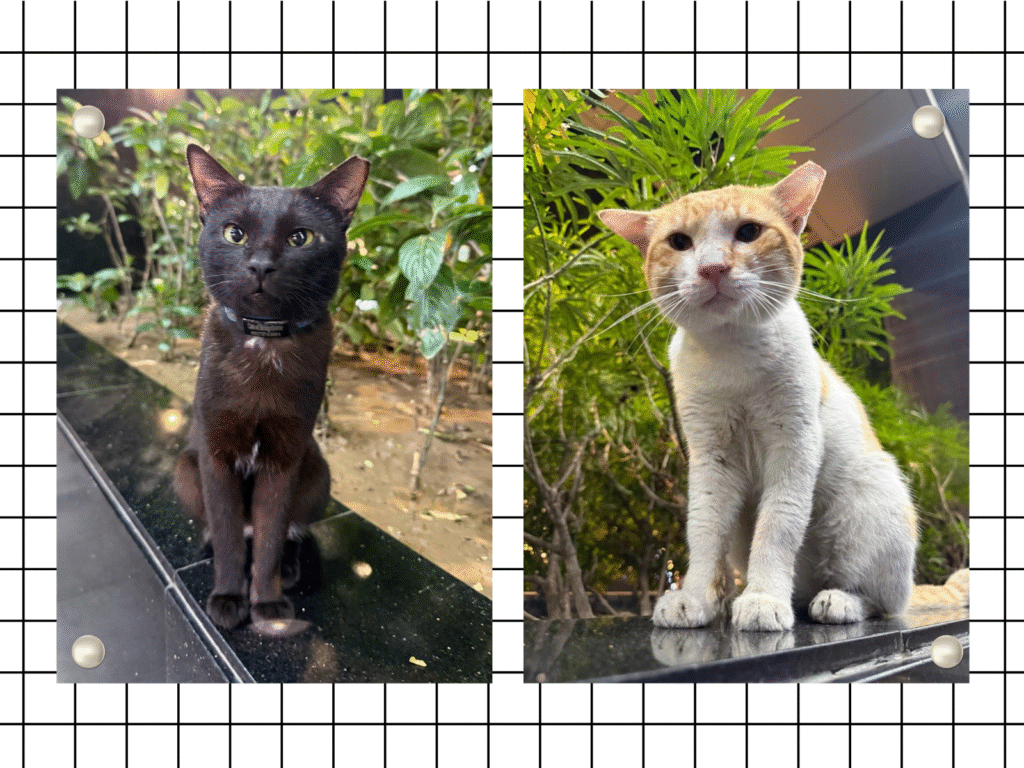
On a Thursday afternoon, just before closing, the property manager’s phone lights up again. A resident has sent a photo: a cat sleeping beneath a parked car in the basement. “This is dangerous,” the message reads. “Please remove it immediately.”
An hour earlier, another resident had stopped by the office with a different concern. The same cat, she said softly, had been there for months. She feeds him when she can. Could management please make sure he isn’t harmed?
At its heart, property management is about balance. And in between those messages described above is where the work actually happens.
The topic of community animals is frequently a pain point in many property management offices. In residential towers, villages, malls, and office complexes, property managers stand in the middle of competing truths. Often, the hardest part of the job is not operations or upkeep — it is discernment. Whose voice carries weight? Which principle must be upheld when opinions clash? How do you protect people and property while giving importance to animal welfare? How do you make decisions that reflect both professionalism and empathy?
This article offers a practical framework for navigating those questions.
Create your organization’s core beliefs on animal welfare.
Being clear about your organization’s stance on animal welfare and stray management simplifies policy creation and staff training. Frontliners such as security guards, housekeeping, admin, and marketing need guidelines to refer back to when implementing any animal-related action or program.
Examples of core beliefs may include:
–We respect life. Every animal’s life has value, regardless of breed, age, usefulness, or ownership status.
–We choose TNVR as a method to humanely control stray populations.
–We believe that animal welfare is human welfare.
–We promote responsible pet ownership.
–We do not harm, abandon, relocate, or round up cats for impoundment.
When these beliefs are formally adopted and written down in a memorandum or circular, it becomes easier to explain policies to customers, tenants, service providers, and employees. Clear principles empower frontliners to respond confidently to concerns.
Establish a TNVR (Trap, Neuter, Vaccinate, Return) program.
If community cats are part of your landscape, and they most certainly are, understanding and running a TNVR program is essential. There is simply no way around it.
So much stress and tension can be avoided in a community if animal welfare policies are preventative rather than reactive, and TNVR is the best, most foundational way to get ahead of concerns.
In a TNVR program, cats are humanely caught, spayed or neutered, vaccinated against rabies, and returned to their territory. At least 70 percent of the colony should be neutered within three weeks to stabilize the population. Doing this allows a community to address the issue at the root. Once the cats are fixed, they no longer reproduce and can live out the rest of their lives in the community while preventing unfixed and unvaccinated cats from entering.
Unlike removal or relocation, which creates a “vacuum effect” where new unsterilized cats move in, TNVR works with nature rather than against it.
Another great thing about TNVR is that it is very good for an organization’s branding and reputation. A community that shows compassion for animals in a strategic and sustainable way is a community that demonstrates foresight, risk awareness, and long term thinking. It shows maturity of governance.
A good example of this is how Meralco has incorporated TNVR and made it a bolster for their organization’s culture of malasakit.
Inform the community.
Implementation requires more than policy. It requires understanding. Rolling out a TNVR program involves an awareness campaign, particularly in its early stages. All stakeholders — senior management, staff, third-party service providers, residents, tenants, and customers — must be given accurate information about TNVR. Ideally, property managers should seek their buy-in from the outset. When people understand and believe in the program, they are more likely to support it.
Providing clear communication materials, such as posters and informational flyers, can make a significant difference. These materials give frontliners something concrete to hand to residents or customers who have questions.
Set aside a budget for humane community animal management.
If there is an opportunity to include a line item in the Property Management Office (PMO) budget dedicated to humane community animal management, do so. This ensures that the TNVR program is properly funded and removes the burden of fundraising from already exhausted volunteers.
Allocating a budget for humane community animal management demonstrates foresight. Experienced property managers understand that community animals will inevitably need to be managed. Setting aside funds for TNVR and other animal welfare–related expenses allows the PMO to be proactive and address potential issues before conflicts happen.
If you encounter pushback, it may be helpful to emphasize that the cost of preventive humane management is significantly lower than the financial and reputational expense of crisis management should a cat-related PR issue arise.
Work with the local community cat caregivers.
When addressing community animal concerns, collaboration makes the work easier.
Engage the community cat caregivers in your area. These individuals often possess years of practical, on-the-ground experience. They likely know each cat and can assist in monitoring, feeding the animals, and keeping the area clean. They are also often the first to alert management to any animal-related concerns.
Community cat caregivers provide important, unpaid service to the neighborhood. To overlook their expertise and commitment to the animals is to miss an invaluable resource. Consider them your allies. Recognizing their insight and treating them as partners is key to designing humane, sustainable solutions that benefit both residents and animals.
Tap an animal welfare organization capable of humane catching of animals.
There will be moments when removal becomes necessary. An animal may be visibly ill, injured, or behaving in a way that poses a genuine risk.
Having a trusted animal welfare organization as a partner ensures that your frontliners have a clear course of action that does not automatically involve calling the barangay or resorting to impoundment. This is important. People often resort to impoundment when there is no other option available.
Partnering with a group that has the capacity to humanely catch animals such as Biyaya Animal Care is equally essential. At times, a PMO may give instructions to catch an injured animal, but no one on site is properly trained or equipped to do so. As a result, the animal continues to suffer without intervention.
If staff and volunteers are unable to assist with catching, it is imperative to work with an organization equipped to handle the process safely and humanely.
Assign feeders and provide designated feeding stations.
Controlled feeding is a critical component of a successful TNVR program.
Outright bans on feeding can lead to nuisance behaviors such as fighting and rummaging through garbage. It also often drives the practice underground, which simply results to unmonitored feeding and unregulated feeding areas that are harder to keep clean, apart from the negative publicity that will probably follow suit.
On the other hand, feeding excessively can attract unfixed animals. Leaving food out for extended periods invites insects and increases the risk of “dumping,” where additional animals are abandoned in the area. PAWS’ KabaliCat program suggests a maximum of 45 minutes for food to be left out. After that, the remaining food should be cleared away.
Like TNVR itself, effective colony feeding requires structure and discipline. Assign registered feeders, establish clear schedules, and designate specific feeding stations to maintain order, cleanliness, and accountability.
Place informative signage in visible areas.
The signage should clearly communicate key directives. First, request that the public refrain from feeding the animals, as volunteers follow a strict feeding schedule and controlled portions essential to the success of the TNVR program. Second, advise against petting the animals for safety reasons. Third, remind the public that abandoning new animals in the area is harmful and illegal. In areas with vehicular traffic, signage should also encourage drivers to slow down.
Here’s a suggested copy for the signage:
Community Cats Under TNVR Management
These cats are part of a Trap-Neuter-Vaccinate-Return (TNVR) program. This program helps control the cat population effectively and humanely.
–Please do not feed the cats. They are on a regulated feeding schedule. If you want to register as a volunteer feeder, please email [insert email address].
–For your safety and the safety of the cats, please avoid petting or handling them.
–Please do not abandon or leave new animals in this area. Dumping animals puts both the existing cats and the abandoned animal at risk. Animal abandonment is illegal under the law.
For areas with vehicular traffic:
Slow down. Community animals may be present in this area.
Prepare standard spiels.
A spiel is a pre-approved statement that frontliners can repeatedly use in different situations. Providing spiels will reduce the stress of having to come up with a response every time a concern arises. It also ensures that messaging remains aligned throughout the organization.
For example, if a guard sees someone feeding leftover table scraps to a community cat:
“Ma’am/Sir, pasensya na po. Pinagbabawal po ang pagbibigay ng pagkain sa mga pusa. May strict feeding schedule po sila bilang bahagi ng TNVR program ng komunidad. Kung nais po ninyong mag-volunteer bilang regular feeder, maaari po kayong mag-message sa number na ito.”
If a resident requests the removal of cats:
“Ma’am/Sir, our organization’s core principles include respect for life and the use of TNVR as our approach to managing stray populations. We do not relocate or impound cats, as the cats in this area are part of an established TNVR program designed to stabilize and responsibly manage the community population. Here is a flyer explaining how the program supports the safety and sustainability of our community. May we understand your specific concern so we can address it appropriately?”
Impoundment should not be a default reaction.
When addressing community concerns about community animals, take a moment to also acknowledge the positive connections many residents have with these animals.
Be mindful, too, of the potential public backlash that impoundment can trigger. In the majority of municipalities in the Philippines, pounds are overcrowded and under-resourced, with unadopted animals routinely euthanized. Automatically calling the barangay to address a complaint is not a long-term solution and may create reputational and branding consequences for the property.
Instead, communicate clearly that a TNVR program is already in place to responsibly manage the population. Then zero in on the specific issue and address it directly.
Is cat feces an issue? Designate sweepers or provide litter boxes when possible. Are the residents or customers feeding scraps and leftovers? Release guidelines on responsible feeding. In extreme cases, a cattery may be the solution a community needs.
For nearly every cat-related concern, there is a solution that does not involve harming, starving, or relocating the animals. Understand that by first exhausting all other possible solutions, you are showing a commitment to responsible animal management and, ultimately, saving lives.
Establish an emergency response protocol.
Respecting life requires preparedness. Responsible management also means planning for the possibility of incidents.
There may be instances when a community animal scratches or bites a customer or resident. Rather than rejecting TNVR out of fear of this possibility, establish a clear and well-communicated emergency response protocol.
–Keep a list of nearby bite centers readily available.
–Incorporate animal scratches and bites into your medical first-aid procedures.
–Immediately wash the wound thoroughly with soap and running water for at least 15 minutes, followed by the application of povidone-iodine.
–Seek medical evaluation promptly.
Preparation reduces panic. Clear protocols and thoughtful planning reflects genuine respect for life in all its forms.
View adoption as an opportunity, not as part of an ultimatum.
While adoption may be a viable option for some cats, particularly the friendly and sociable ones, it should never be treated as an ultimatum for community cat volunteers. Expecting exhausted volunteers to rehome cats under the threat of removal is unrealistic and unfair. Adoption should be an opportunity, not a forced solution dictated by a business or property management office.
When done properly, adoption strengthens the TNVR program. The goal is to support responsible colony management, not to pressure volunteers with an impossible choice between adoption and elimination.
A strong adoption program begins by identifying which cats are truly suitable for homes. These cats can be posted online so that potential adopters can learn about them. A clear screening process should also be in place to ensure responsible placements. Online forms such as Kapon Ampon’s adoption questionnaire can serve as a useful starting point for property managers who wish to develop their own forms.
Most importantly, any adoption effort should be a collaboration between the Property Management Office and local community cat caregivers. Do not adopt out cats without the knowledge of their primary caregivers.
Handle complaints confidently and with temperance and discernment.
When addressing concerns about community animals, anchor yourself in your organization’s core beliefs on animal welfare and in the broader sentiment of the community you serve. Not every complaint reflects the majority view; often, the loudest voices are simply the most agitated, not the most representative.
A competent property manager listens carefully, weighs perspectives thoughtfully, and responds without haste or hostility. Exercise discernment. Respond with clarity.
It will serve property managers well to remember: a community is made up of many individuals. While it is often impossible to keep everyone happy, property managers have a crucial role to play in shaping a kinder future that espouses coexistence with the animals that share our world. A question I often ask when discussing community cats: are we building a community that resorts to outdated, ineffective practices or are we shaping a better world for all?
History reminds us that progress is often met with resistance. There was opposition when women first gained the right to vote. There was resistance when slavery was abolished. Social norms that once seemed fixed eventually shifted because society’s understanding evolved.
Times change. Expectations change. Standards change. Responsible leadership requires that we evolve with them.
Property Management in a Changing World
Something is changing in the way we think about animals. We now live in a time in which a growing number of people are compassionate towards animals and believe in the ethical and humane treatment of all living beings. Society is shifting towards a kinder, more empathetic mindset that influences the way we view the world, craft policies, and define right and wrong. The question is no longer how animals come to share our communities. The question is how we respond when they do.
This growing ethical awareness is the reason why the removal of community cats using inhumane and unethical methods is leading to public uproar and public relations crises left and right. Regardless of what may still be technically legal, what was once widely accepted is no longer socially acceptable. People know better, and they expect property management offices to do better. Policies and laws will eventually change, as these things often follow the general public’s shifts in thinking. In the meantime, we must act sensibly even before an ordinance says we should. Because, yes, we already know better.
And so when the cats arrive, as they inevitably will, we can see them not as problems to be removed, but as lives to be considered. And equipped with the right knowledge and preparation, we can respond in a way that reflects the kind of community we claim to be.

