One of the things I truly struggle with as an animal advocate is coming to terms with humanity’s indifference and cruelty. And how it is normalized in society.
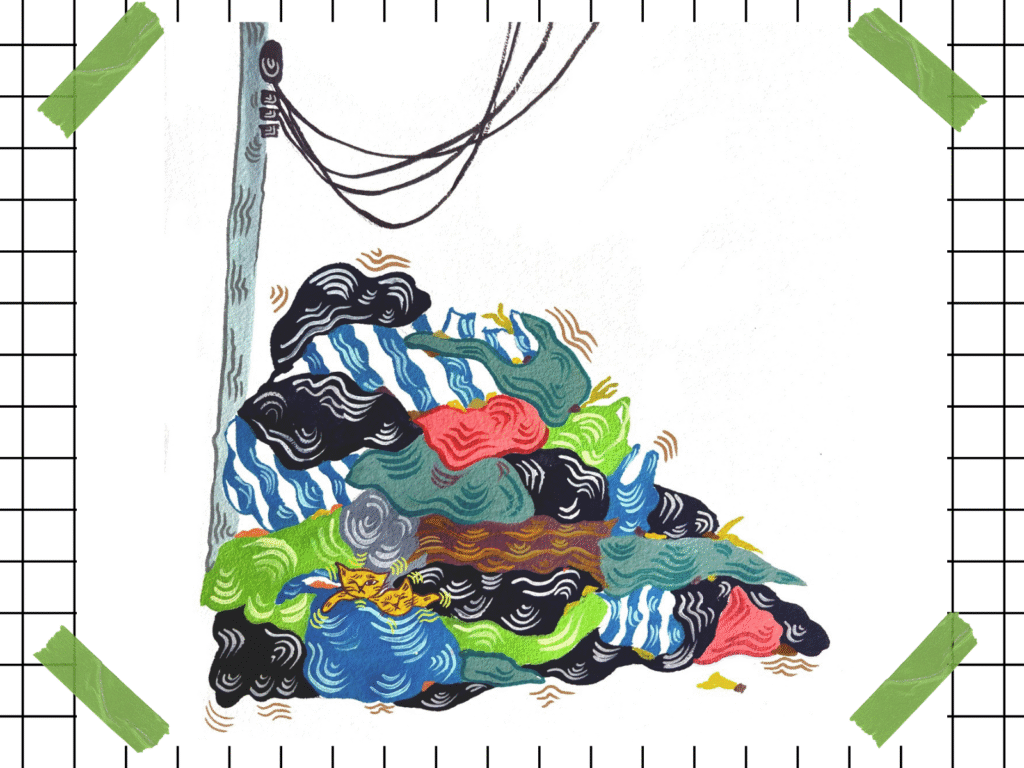
For example: kittens thrown away like trash. If you live in the Philippines, you probably know someone who thinks this is acceptable. Throughout my years as a rescuer and fosterer, I have rescued kittens from garbage piles more times than I can count.
Just a few days ago, our neighbor reported hearing meowing coming from a pile of garbage laid out on the sidewalk inside our village. I read the message late. By the time I walked to the street where they were, the trash was gone. The kittens likely went with it.
I have not been able to stop thinking about them. I only watched the video sent to me, but I can still hear their pitiful meows.
There is violence in throwing a living being away as refuse. It tells you that the people responsible believed that the kittens’ lives had no value. That they were no different from peelings and plastic, from yesterday’s leftovers. Just something to be taken out. No skin off their nose to do so.
I find myself wondering about the people who do this. I wonder if they know what happens after they tie the bag shut. If they ever think about what that last day is like. The last sensations. The final hours. I wonder if, years from now, these kittens will surface in their memory. I wonder if they will remember them at all.
This is what happens.
Garbage in our cities is typically placed in bins or laid out along sidewalks. It stays outside for hours, sometimes days—exposed to heat, pouring rain, scavengers. Inside a bin or a plastic bag, the kittens immediately feel confusion and pain.
They feel the absence of their mother first. They still remember the softness of her fur, her warm milk, the comfort of her heartbeat.
And then the air slowly thins. They can hardly move their little bodies. Pressure builds as more garbage is piled on top of them. The kittens experience heat they cannot flee from. There is no comfort. Only flies. Ants. Urine. Feces. Liquid seeping into their fur. Hunger gnawing inside their small bellies.
If, by some miracle, they survive until the garbage truck arrives, they are loaded into it with the rest of the trash. Garbage collectors unceremoniously throw the plastic bag with the kittens inside. Their bodies are bruised. Bones break. They feel excruciating pain. And maybe, if angels are looking after them, they pass out and die at this point.
Those that are still alive experience being carried across kilometers in darkness, vibration, compression.
The kittens don’t understand what’s happening. There is only sound. Impact. Pain.
To inflict this degree of suffering on a defenseless being is to fracture something fundamental in yourself.
And what troubles me most is not only the act itself, but how common it is. How unremarkable it has become in our society. How, when we find out that someone we know did this, we are not angry enough. We are not storming their gates with pitchforks. In fact, often, we let it slide. At most, we tell them it’s wrong and that there’s a better solution: kapon. Sometimes, we say nothing at all.
When we allow ourselves to throw life away without thought, we do not just lose the animal, we also lose a piece of ourselves. We lose something essential. Something that cannot be easily recovered.
I want them to know this. I hope this article finds its way to them. I hope someone who reads this eventually tells them, “Napakatindi ng pagdurusa ng mga kuting na tinatapon sa basura. Itigil mo ang kalupitang yan.”
The kittens reported to me are gone. I cannot change that. But I can bear witness. I can refuse to let their brief existence vanish just like that. And I can continue to believe that choosing care, again and again, is how we push back against a culture of indifference.
To care is inconvenient, sure. But to not care is to lose an essential part of yourself. Like Voldemort splitting his soul every time he utters avada kadavra.
Their little lives were all they had. They mattered.
If you see or hear kittens inside the trash, find a way to help them. Even the simplest act of opening the plastic bag or box, lifting them out, setting them somewhere safe means something. It interrupts harm. It gives them air, movement, a chance. You may not be able to do everything, but doing this much already lessens their suffering.